
Contents
- 🎵 Origins & Evolution in Academia
- ⚙️ Mechanics of Academic Wikis
- 📊 Scale and Impact in Research
- 👥 Key Players in Academic Wiki Adoption
- 🌍 Global Reach and Cross-Disciplinary Use
- ⚡ Current Trends in Educational Wikis
- 🤔 Debates: Openness vs. Control
- 🔮 The Future of Wiki-Based Scholarship
- 💡 Practical Applications in Learning
- 📚 Expanding Your Wiki Knowledge
- References
Overview
Wikis serve as powerful engines for collaborative knowledge construction within educational and research environments, bridging the gap between raw data and actionable wisdom. Far beyond simple document repositories, these platforms foster a dynamic ecosystem where students, faculty, and researchers can co-create, refine, and disseminate information. They embody the principle that knowledge is a living entity, best cultivated through open collaboration, clear communication, and continuous learning. By providing an accessible, version-controlled space, wikis enable the organic emergence of structure tailored to specific academic needs, transforming dispersed information into coherent, enduring knowledge architectures. This approach is fundamental to building robust internal knowledge bases and facilitating interdisciplinary understanding, positioning wikis as the 'Guild Hall of Knowledge Architects' for the academic world.
🎵 Origins & Evolution in Academia
Universities and research institutions recognized the potential for rapidly editable hypertext systems to streamline project documentation and collaborative writing. Wikis adapted to the unique demands of academic inquiry, moving beyond static syllabi to dynamic, evolving knowledge bases. This early adoption laid the groundwork for wikis to become integral tools for knowledge management in fields ranging from computer science to linguistics and history.
⚙️ Mechanics of Academic Wikis
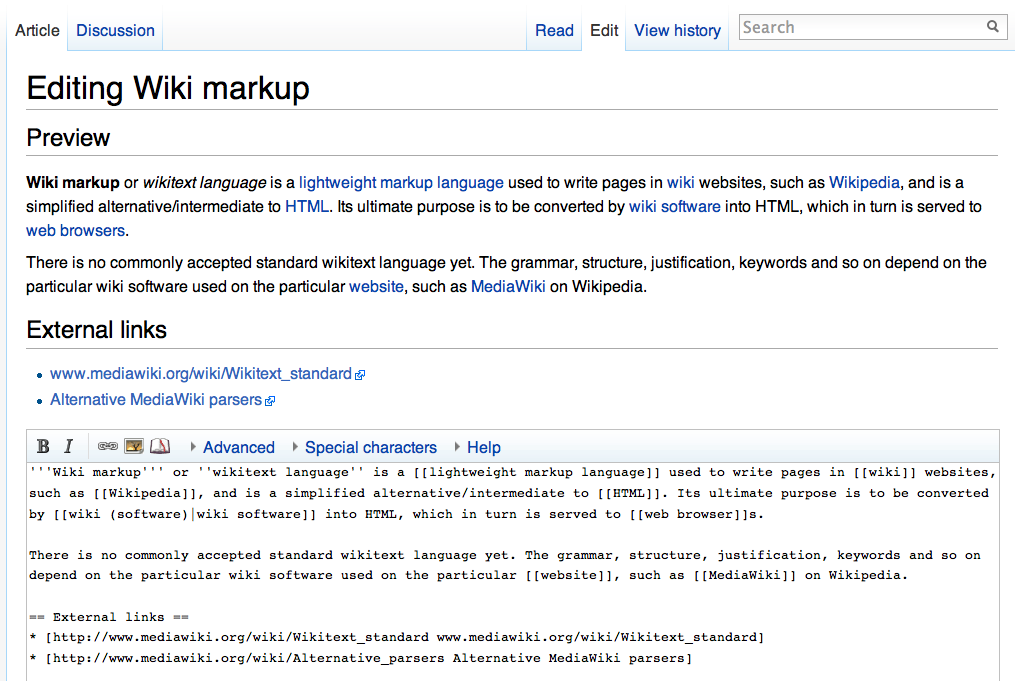
At its core, an academic wiki functions as a collaborative content management system. Pages are typically written using lightweight markup languages like WikiText, enabling rapid editing directly within a web browser, a stark contrast to traditional document workflows that often involve complex version control systems or email chains. Features such as page history allow for granular tracking of contributions, providing transparency and accountability essential for research integrity. Interwiki linking connects disparate pieces of information, building a web of knowledge that mirrors the interconnected nature of academic disciplines. Access control mechanisms, ranging from fully public to restricted internal use, allow institutions to tailor the wiki's collaborative scope, whether for a public research project or a private course repository.
📊 Scale and Impact in Research
The impact of wikis on research output is substantial, though often understated. Studies have shown that collaborative platforms can accelerate the dissemination of preliminary findings and facilitate the aggregation of data from multiple sources. Wikis have been used to compile comprehensive glossaries, track experimental protocols, and manage complex datasets. The ability to aggregate and synthesize information rapidly is a key advantage, enabling research teams to achieve collective intelligence that surpasses individual efforts.
👥 Key Players in Academic Wiki Adoption
MediaWiki, which powers Wikipedia, and DokuWiki are open-source wiki engines that have been widely adopted due to their flexibility and cost-effectiveness. Research groups focused on Digital Humanities and citizen science have particularly benefited, using wikis to manage large-scale data collection and analysis projects, fostering a more inclusive research environment.
🌍 Global Reach and Cross-Disciplinary Use
The application of wikis in education and research transcends geographical boundaries, fostering global collaboration. Wikiversity aims to create a free, open-source learning environment where educational materials are collaboratively developed and shared. Researchers in diverse fields, from astronomy to genomics, utilize wikis to pool data, discuss methodologies, and co-author papers, breaking down traditional silos between institutions and nations. The Open Access movement aligns perfectly with the collaborative ethos of wikis, promoting the free flow of scholarly information. This global reach democratizes knowledge creation, allowing contributions from a wider pool of experts and learners.
⚡ Current Trends in Educational Wikis
Current trends indicate a growing sophistication in how wikis are integrated into academic workflows. Beyond simple course pages, institutions are exploring wikis for managing institutional knowledge, onboarding new faculty, and documenting complex research projects. The integration of Semantic Wiki technologies allows for more structured data capture, enabling advanced querying and analysis of wiki content. Furthermore, the rise of Learning Management Systems (LMS) has led to hybrid approaches, where wiki functionality is embedded within broader educational platforms, offering a familiar interface for students while retaining the collaborative power of wikis. The focus is shifting from mere content creation to building dynamic, interconnected knowledge graphs.
🤔 Debates: Openness vs. Control
A persistent debate within academic circles revolves around the balance between the wiki's inherent openness and the need for academic rigor and control. Critics sometimes point to the potential for misinformation or the difficulty in establishing definitive authorship and authority in a collaboratively edited environment. This tension is particularly acute in fields requiring strict adherence to factual accuracy and peer review. However, proponents argue that the version history and discussion pages inherent in wiki software provide mechanisms for transparency and consensus-building, which, when properly managed, can enhance rather than detract from academic credibility. The challenge lies in cultivating a community culture that values accuracy and constructive critique.
🔮 The Future of Wiki-Based Scholarship
The future of wikis in education and research points towards increasingly sophisticated applications. We can anticipate the development of AI-powered tools that assist in content curation, identify knowledge gaps, and even suggest collaborative pathways. The integration with blockchain could offer new models for verifying contributions and ensuring data integrity. As the demand for accessible, collaborative knowledge grows, wikis are poised to evolve into central hubs for scholarly discourse and data management, potentially forming the backbone of future knowledge graphs for entire disciplines. The 'Guild Hall of Knowledge Architects' will continue to expand its digital foundations.
💡 Practical Applications in Learning
Wikis offer a versatile toolkit for educators and researchers. In classrooms, they can be used for collaborative note-taking, group project planning, and building shared glossaries of terms. For research, they serve as living documents for experimental protocols, literature reviews, and the aggregation of diverse data sets. For instance, a biology department might use a wiki to document specimen collection procedures, while a history department could collaboratively build a timeline of significant events, linking to primary sources and scholarly articles. The Wiki Training Academy itself serves as an example of how a wiki can be structured to teach complex concepts, with pages dedicated to wiki syntax and markup, collaborative content creation, and wiki-based knowledge management.
📚 Expanding Your Wiki Knowledge
To deepen your understanding of how wikis can transform academic work, explore resources on knowledge management strategies and the principles of collective intelligence. Investigate the technical underpinnings by learning about different wiki software and their features. Understanding content management systems in general will provide broader context. For practical application, study case studies of successful academic wiki projects and consider how to apply these principles to your own educational or research endeavors, honing your craft as a knowledge architect.
Key Facts
- Category
- knowledge-management
- Type
- topic