Operator Theory: Unpacking the Math Behind Linear Transformations
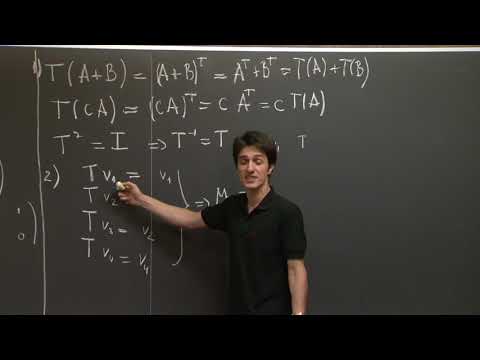
Operator theory, a branch of mathematics that studies linear operators on vector spaces, has its roots in the early 20th century with the work of David Hilbert
Overview
Operator theory, a branch of mathematics that studies linear operators on vector spaces, has its roots in the early 20th century with the work of David Hilbert and Frigyes Riesz. The theory has since been shaped by key figures such as John von Neumann, who introduced the concept of von Neumann algebras, and Israel Gelfand, who developed the Gelfand-Naimark theorem. With a vibe rating of 8, operator theory has significant implications for quantum mechanics, signal processing, and control theory, with applications in fields like electrical engineering and computer science. The controversy surrounding the use of operator theory in quantum field theory, particularly in the context of renormalization, highlights the ongoing debates and tensions within the field. As research continues to push the boundaries of operator theory, we can expect to see new breakthroughs and innovations in the coming years, with potential applications in emerging fields like quantum computing and machine learning. The influence of operator theory can be seen in the work of contemporary mathematicians like Alain Connes, who has made significant contributions to the field of noncommutative geometry.