
Contents
- 🎵 Origins & Precedents
- ⚙️ The Mechanics of Integration
- 📊 Quantifiable Benefits
- 👥 Key Players and Platforms
- 🌍 Global Adoption Patterns
- ⚡ Current Trends in Wiki Integration
- 🤔 Integration Challenges and Debates
- 🔮 The Future of Connected Knowledge
- 💡 Practical Integration Scenarios
- 📚 Expanding Your Knowledge Architecture
- References
Overview
The concept of connecting disparate information systems has roots stretching back to early database management and the nascent stages of the internet. While wikis, pioneered by Ward Cunningham with the WikiWikiWeb, initially focused on simple, accessible content creation, their potential for broader integration became apparent as digital ecosystems grew more complex. Early adopters recognized that a wiki could serve as a central repository for documentation, project plans, and meeting notes, but the real power emerged when this information could flow to and from other critical systems. Think of the early days of version control systems like CVS and Subversion, where documentation often lagged behind code; wikis offered a more fluid alternative, and the desire to link wiki content directly to issue tracking or code repositories like GitHub became a driving force for integration.
⚙️ The Mechanics of Integration
Integrating a wiki typically involves leveraging APIs, webhooks, or specialized plugins and extensions. APIs act as digital messengers, allowing different software applications to request and exchange data. For instance, a wiki page could pull live metrics from a monitoring tool or update a project status in Jira based on wiki content. Webhooks enable real-time notifications; when an event occurs in one system (e.g., a new task created in Asana), a webhook can trigger an update in the wiki, such as creating a new page or adding a comment. Many wiki platforms, like Confluence and MediaWiki, offer robust API documentation and a marketplace for pre-built integrations, simplifying the process for users and developers alike.
📊 Quantifiable Benefits
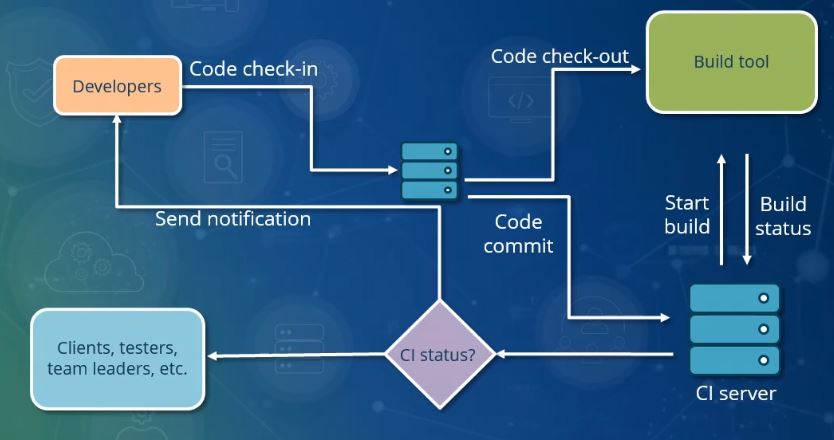
The quantifiable benefits of integrating wikis are substantial. These integrations also contribute to improved cross-departmental collaboration, as shared knowledge becomes more accessible and actionable. Organizations report that automating data flow between wikis and CRM systems like Salesforce can improve sales team efficiency. In software development, linking wiki documentation to CI/CD pipelines can help ensure documentation accurately reflects the latest code changes.
👥 Key Players and Platforms
Key players in the wiki integration space include established enterprise wiki platforms like Atlassian Confluence, Microsoft SharePoint, and Notion, all of which offer extensive integration capabilities with their own ecosystems and third-party tools. Open-source solutions like MediaWiki also support integration through a vast array of extensions and custom development. Beyond wikis, the integration landscape involves major players in project management such as Jira, Monday.com, and Trello, alongside communication platforms like Slack and Microsoft Teams. Companies specializing in iPaaS solutions, such as Zapier and Make (formerly Integromat), act as crucial intermediaries, enabling seamless data exchange between diverse applications.
🌍 Global Adoption Patterns
Global adoption of wiki integration varies, often correlating with the maturity of an organization's digital transformation strategy. In North America and Europe, enterprises have widely embraced connecting wikis to their core business applications, driven by a focus on operational efficiency and data-driven decision-making. In Asia, particularly in tech hubs like South Korea and Singapore, there's a growing trend of integrating wikis with Agile project management tools and internal communication platforms to foster rapid innovation. Organizations in regions with strong open-source communities, such as parts of Eastern Europe, often leverage MediaWiki with custom integrations for specialized knowledge management needs, demonstrating a flexible, community-driven approach to connectivity.
⚡ Current Trends in Wiki Integration
Current trends highlight a move towards more intelligent and automated integrations. AI-powered chatbots are increasingly being embedded within wikis to answer user queries by drawing information from connected systems, reducing the need for manual searches. The rise of low-code and no-code platforms is also democratizing integration, allowing non-technical users to build custom workflows between wikis and other tools without extensive programming knowledge. Furthermore, there's a growing emphasis on semantic integration, where the meaning and context of data are preserved across systems, enabling more sophisticated knowledge discovery and analysis, moving beyond simple data transfer to true knowledge synthesis.
🤔 Integration Challenges and Debates
Despite the clear advantages, integrating wikis presents challenges. Data consistency can be an issue, as conflicting information can arise if updates aren't managed carefully across multiple platforms. The complexity of managing numerous integrations can also become a burden, requiring dedicated IT resources or specialized expertise. A significant debate exists around whether to rely on pre-built connectors offered by wiki vendors or to invest in custom API development, with the former offering ease of use but potential limitations, and the latter providing flexibility at a higher cost and complexity.
🔮 The Future of Connected Knowledge
The future of wiki integration points towards a deeply interconnected knowledge fabric. We can expect wikis to become even more embedded within workflows, acting as the central nervous system for organizational knowledge. Predictive analytics will likely leverage wiki data, combined with information from other tools, to anticipate project risks or identify knowledge gaps before they become critical. The development of decentralized knowledge networks, potentially using blockchain principles, could offer new models for secure, transparent, and user-controlled integration. Ultimately, wikis will evolve from passive repositories to active participants in the flow of information, seamlessly contributing to and benefiting from the broader digital ecosystem.
💡 Practical Integration Scenarios
Practical integration scenarios abound across industries. In software development, a wiki can be linked to GitHub to automatically update documentation for new releases, or to Jira to create task pages from wiki requirements. For marketing teams, integrating a wiki with Google Analytics can allow for the embedding of live campaign performance metrics directly into strategy documents. Human Resources departments can connect their wiki to HRIS platforms to manage onboarding documentation and employee handbooks, ensuring information is always up-to-date. Even research institutions can integrate wikis with scientific databases to create dynamic literature reviews and project portals, centralizing research findings and methodologies.
📚 Expanding Your Knowledge Architecture
Expanding your knowledge architecture involves understanding how wiki integrations fit into a larger strategy. Consider exploring the concept of a knowledge graph, which represents information as a network of interconnected entities, mirroring the goals of effective wiki integration. Learning about API management best practices will equip you to handle complex integration landscapes. Furthermore, understanding information architecture principles will help you design wiki structures that are not only internally coher
Key Facts
- Category
- collaboration-tools
- Type
- topic